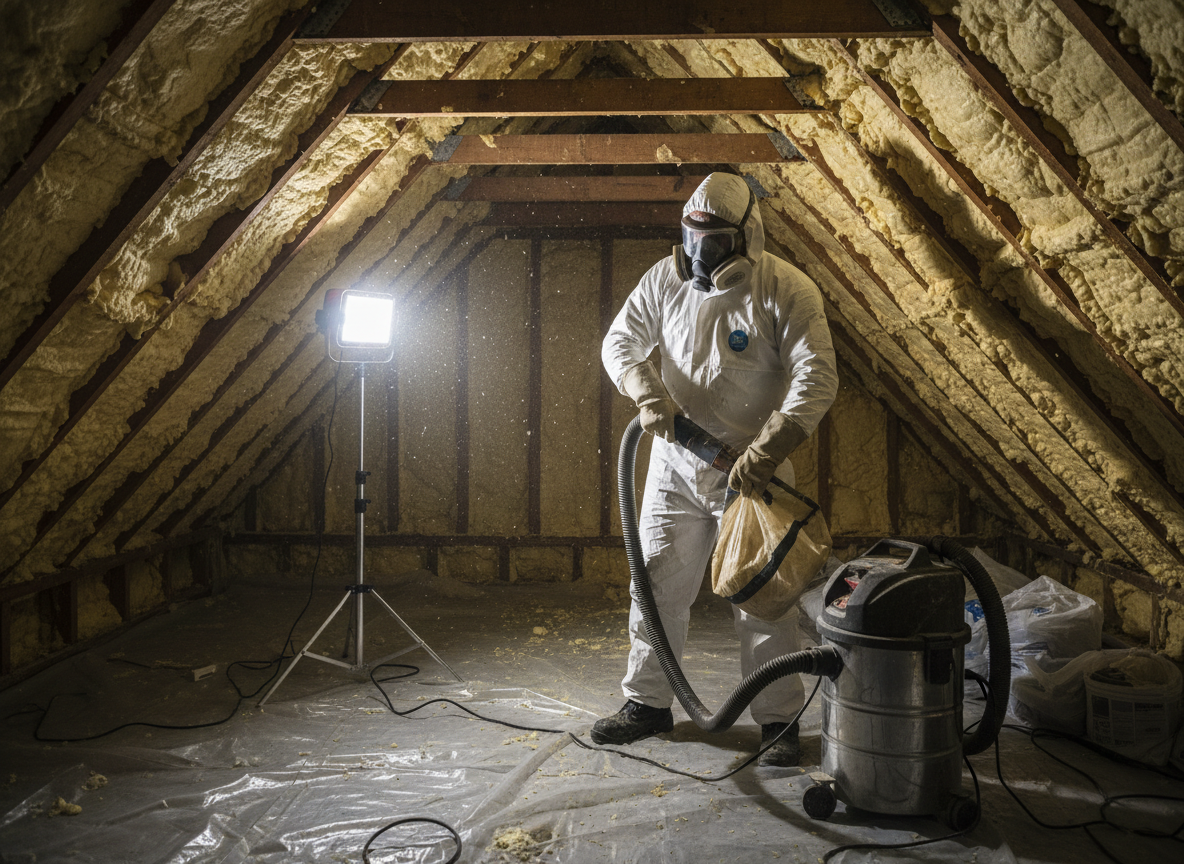
Telford's post-war housing stock, particularly 1960s and 1970s semis and terraces around Hollinswood and Oakengates, often received spray foam insulation that now traps moisture against rafters and tiles. Shropshire's frequent rain and mild winters accelerate condensation issues once the foam blocks natural airflow, leading to timber decay that only becomes visible during removal. Homeowners in these areas frequently discover the foam has bonded directly to slate or concrete tiles, complicating extraction without damaging the roof structure.
Removal work here requires careful containment to prevent dust and debris from entering living spaces below, especially in homes with open loft hatches common in Telford's older stock. Technicians must account for variable foam thickness applied over decades, as thicker layers in colder loft sections demand slower, layered cutting to avoid pulling down wiring or insulation fragments. Local building practices from that era also mean many lofts contain older electrical runs that sit close to the foam, increasing the risk of accidental damage if the job is rushed.
Shropshire planning rules and building regulations require proper ventilation restoration after foam removal to meet current standards, particularly in properties near the Ironbridge area where heritage considerations can apply. DIY attempts often leave residue that continues to hold moisture, worsening rot in the damp local climate. Professional extraction includes full debris clearance and disposal compliant with waste rules, followed by inspection for any hidden water damage that Shropshire's soil conditions and rainfall patterns commonly produce.
Technician insight
In Telford, the thing that catches most people out with loft spray foam removal is how the foam bonds tightly to the underside of tiles in 1970s terraces around Hollinswood, trapping moisture from Shropshire's wet winters and causing hidden rafter rot that only appears once the foam is stripped away.
Loft Clearance in a Hollinswood Terrace
Homeowner reported persistent damp smells. Inspection revealed spray foam sealing in condensation against the rafters. We removed the foam in sections, cleared residue, and opened ventilation paths. The loft dried out without further timber issues.
How it works
- 1
Initial Assessment
Inspect the loft space, identify foam coverage, check for timber damage, and note any wiring or ventilation constraints typical in Telford homes.
- 2
Site Preparation
Set up containment barriers, protect access routes, and establish safe working platforms to prevent dust migration into living areas below.
- 3
Foam Extraction
Cut and remove foam in controlled sections, separating it from tiles and rafters while managing the variable thickness found in local properties.
- 4
Cleanup and Restoration
Clear all debris, treat affected timber if needed, and restore ventilation to address the moisture issues common in Shropshire lofts.
Pricing
Costs depend on loft size, foam thickness, and any timber treatment required; we provide upfront quotes after inspection.