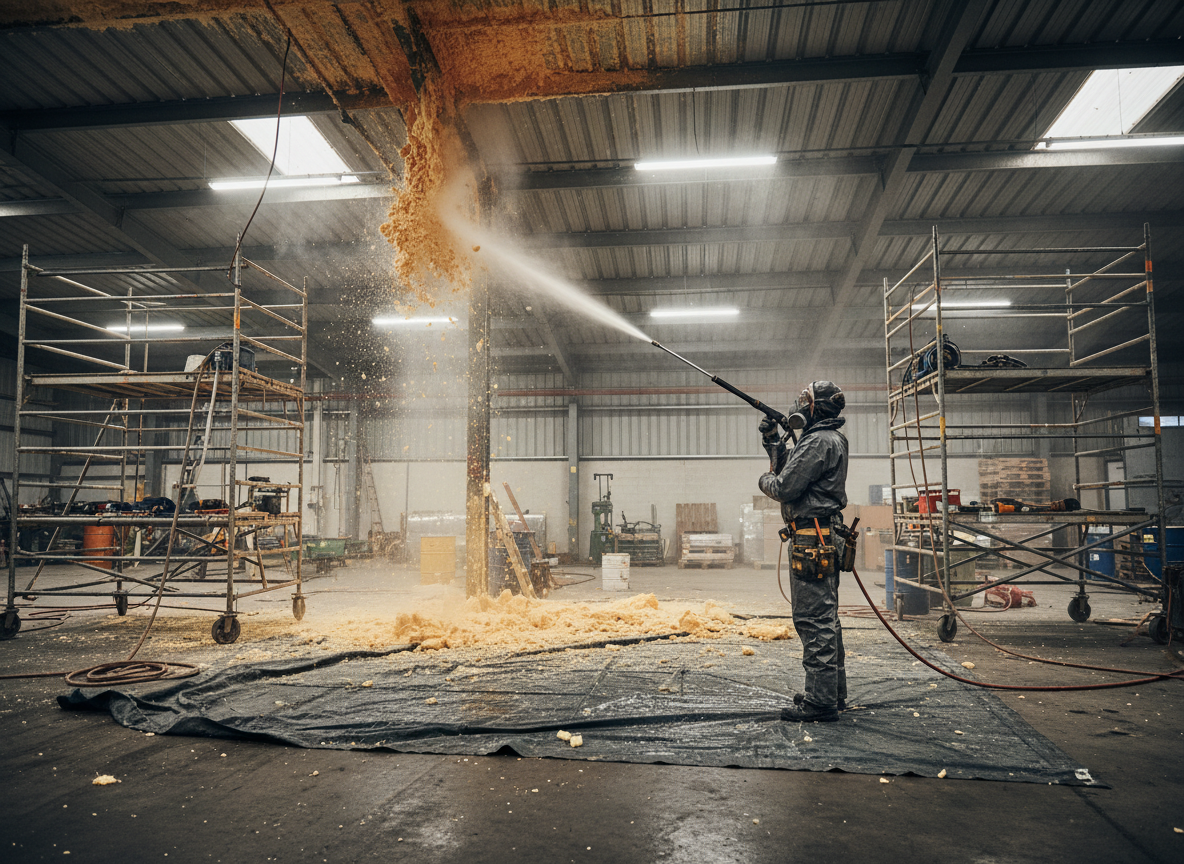
Warehouses in Telford often feature steel portal frames with corrugated metal roofs and walls where spray foam was applied for thermal control. Removing it requires separating the foam from thin metal sheets without buckling panels or leaving residue that traps moisture against the steel. In Hollinswood and nearby industrial zones, many units built in the 1970s and 1980s used closed-cell foam directly on purlins, creating hidden pockets that must be cut and peeled in sections to avoid damaging roof lights or gutter lines.
Large open volumes mean dust and off-gassing travel far, so containment with negative air machines and sealed poly barriers is essential before any scraping begins. Floor drains common in Telford logistics units can become clogged with foam particles if not protected, leading to costly clean-up with the local drainage authority. Edge cases include foam applied over existing mineral wool or bitumen coatings, which requires solvent testing first to prevent chemical reactions during removal.
Disposal follows Shropshire waste regulations for construction materials, with foam classified as non-hazardous but bulky, so volume reduction on site keeps transport costs down. Workers must watch for hidden electrical conduits and fire suppression lines often routed through the insulation layer in older Telford warehouses. Proper sequencing prevents roof leaks during wet Shropshire weather once the thermal layer is gone.
Technician insight
In Telford, the thing that catches most people out with warehouse spray foam removal is how the 1980s-era foam on Hollinswood industrial units bonds into the corrugations of the metal roof sheets. Homeowners or facility managers expect a simple scrape but the foam fills every valley, so you have to work in small strips or risk tearing the panels when you pull too hard.
Foam removal from a logistics unit off Stafford Park
The warehouse had closed-cell foam applied directly to the steel roof in the 1990s, trapping condensation against the metal. We found foam had also crept into the gutter brackets and around the fire alarm cabling. After setting up full containment we cut the foam in narrow strips, cleared the brackets, and removed the debris without disturbing the roof lights. The client was able to re-inspect the steel and schedule new insulation work the following week.
How it works
- 1
Site Assessment
Inspect the warehouse structure, foam type, and access points while noting roof lights, services, and floor drains.
- 2
Containment Setup
Install sealed barriers and negative air units to control dust across the large open space before cutting begins.
- 3
Foam Removal
Cut and peel foam in manageable sections from metal surfaces, protecting purlins and avoiding panel distortion.
- 4
Clearance and Disposal
Vacuum residues, remove debris through designated routes, and arrange compliant off-site disposal.
Pricing
Cost depends on warehouse size, foam thickness, and access difficulty; upfront quotes provided after inspection.