2026-10-23 ·
How to Identify Failing Spray Foam in Shropshire Properties
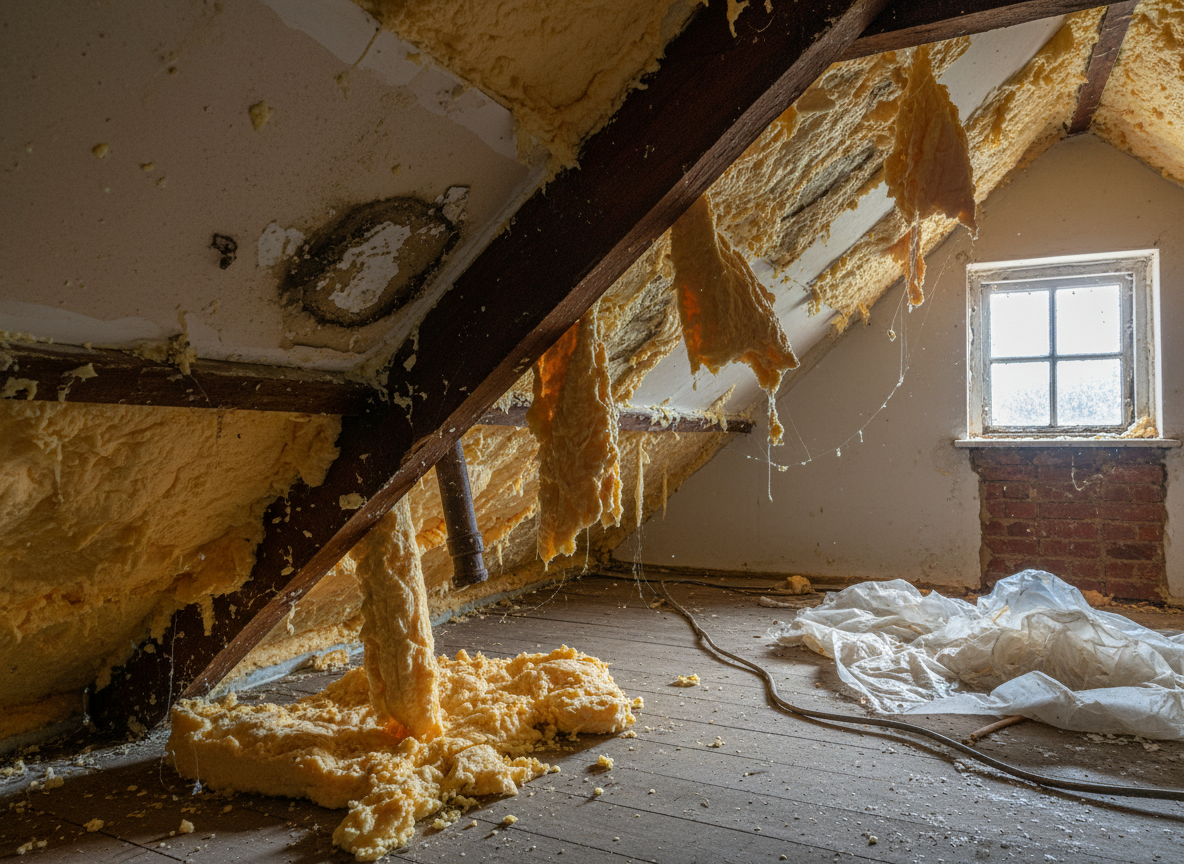
Failing spray foam in Shropshire properties often shows through sagging sections, yellowing discoloration, and musty odors within 7–12 years of installation, especially in Telford lofts exposed to frequent rainfall and temperature swings. Homeowners in neighborhoods like Hollinswood and surrounding estates notice these issues first during routine inspections because the region's clay-heavy soil and high winter humidity trap moisture against roof timbers.
Visual Indicators in Loft Spaces
In Telford's post-war semis and 1970s detached homes, spray foam applied directly to roof undersides commonly fails at the edges first. Look for cracks wider than 2 mm, foam pulling away from rafters, or dark patches where water has pooled. These signs appear more often after heavy autumn rains because Shropshire's average 800 mm yearly precipitation soaks through older tile roofs. Check for crumbling texture by pressing gently with a gloved hand; genuine degradation feels spongy rather than firm. Properties near Wellington and Newport show similar patterns due to shared building styles from the same era. Regular loft checks every six months help catch problems before insulation loses its thermal value entirely.
Moisture and Odor Clues Tied to Local Conditions
Shropshire's cold, wet winters accelerate mold growth behind failing spray foam because temperatures drop below freezing while lofts remain poorly ventilated. A persistent earthy smell in upstairs rooms often signals trapped condensation, particularly in Telford homes built before cavity wall upgrades. Measure relative humidity above 65 % with a simple meter during January and February when external moisture levels peak. Dark staining on ceiling plaster or peeling wallpaper directly below the loft indicates water tracking through degraded foam. These conditions differ from drier counties because local soil retains water, raising ground-level damp that migrates upward through timber frames.
Structural Effects on Telford Housing Stock
Closed-cell foam that has absorbed water adds weight to rafters, stressing 1960s roof structures common across Hollinswood and Shifnal. Over time this leads to slight sagging visible from the street as tiles shift. Open-cell foam degrades faster in humid conditions, turning into a crumbly residue that blocks ventilation gaps and promotes rot in wooden beams. Homeowners frequently discover these issues during mortgage surveys because lenders now flag spray foam in Shropshire properties. An insulation assessment reveals hidden damage without invasive work, helping owners understand whether removal is needed before further timber decay occurs.
Practical Next Steps for Property Owners
Document every sign with dated photos and note the loft's original foam type if known. Avoid disturbing the material yourself because disturbed particles can spread through the house. Contact a removal specialist operating 24/7 from St James House, Hollinswood Road, Telford TF2 9TW for an on-site evaluation that accounts for local roof pitches and ventilation layouts. Readers preparing for work can review What to Expect During Professional Spray Foam Removal in Telford to understand timelines and access requirements. Early identification prevents larger repair costs in Shropshire's older properties where replacement insulation must meet current building standards.